
Tata Prima H.55S: Tata Motors' New Long-Haul Prime Mover Built for Fleet Operators
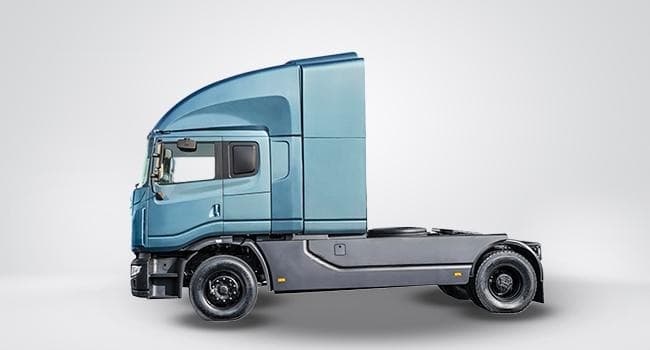
India's heavy trucking industry is going through one of its most interesting transitions in decades. Diesel is no longer the automatic default, and manufacturers are racing to offer fleet operators real alternatives that don't compromise on payload, range, or total cost of ownership. Tata Motors, the country's largest commercial vehicle maker, has been at the center of this shift — and one of its most talked-about products in this space is the Prima H.55S, a 55-tonne prime mover engineered specifically for demanding, long-distance freight movement.
A quick clarification is worth making upfront, because the naming can be confusing: the H.55S badge stands for Tata's hydrogen-powered platform, not CNG. The truck is available with two distinct hydrogen technologies — a Hydrogen Internal Combustion Engine (H2-ICE) variant and a Fuel Cell Electric Vehicle (FCEV) variant. It sits alongside separate CNG and LNG offerings in Tata's broader alternative-fuel commercial vehicle lineup, including the Prima 5530.S LNG tractor and CNG-powered trucks in the Signa and 407 Gold ranges. Together, these products form Tata's multi-pronged strategy to decarbonize freight transport in India — covering battery electric, CNG, LNG, hydrogen combustion, and hydrogen fuel cells under one roof. For fleet operators evaluating their next purchase, understanding where the H.55S fits into this picture matters just as much as the spec sheet itself.
Why Long-Haul Fleets Need an Alternative to Diesel
Long-haul trucking in India is uniquely demanding. Routes stretch across steel plants, cement corridors, ports, and mining belts, often running for 500 kilometers or more without a break. Operators on these routes have historically leaned on high-torque diesel tractors because nothing else could match the range or refueling speed. But rising fuel costs, tightening emission norms, and corporate sustainability mandates from shippers have pushed fleet owners to look seriously at alternatives.
This is exactly the gap Tata Motors is targeting with the Prima H.55S. Rather than asking operators to accept a shorter range or a longer refueling stop in exchange for lower emissions, the truck is designed to match diesel-like usability while running on a genuinely cleaner fuel source.
What Powers the Prima H.55S
At the heart of the H.55S is a Cummins 6.7-litre hydrogen engine producing around 290 HP and 1,200 Nm of torque — figures that are competitive with many diesel prime movers in the same tonnage class. The truck carries a Gross Vehicle Weight of 55,000 kg, putting it squarely in the heavy-duty segment used for cement, coal, fly-ash, steel coil, and bulk cargo movement.
Hydrogen is stored in Type-3 cylinders rated for 350 bar, and Tata has engineered the platform to deliver an operational range in the region of 300–500 km per fill, depending on configuration and duty cycle. Refueling time is reported at around 20 minutes — a critical detail for fleet operators who can't afford long downtime between trips. On the fuel cell variant, Tata has paired higher-capacity stacks (in the 220–240 kW range) with the same underlying platform, giving operators a choice between combustion and electrochemical hydrogen power depending on their infrastructure and duty requirements.
Built on the Familiar Prima Platform
One of the smartest moves Tata has made with this launch is keeping the H.55S visually and mechanically close to the standard diesel Prima. For fleet operators, this isn't a minor detail — it means drivers transitioning from conventional trucks don't have to relearn an entirely new vehicle, and existing service and maintenance familiarity carries over.
The cabin retains Tata's premium Prima design, with features aimed squarely at reducing driver fatigue on long routes: a comfortable, ergonomically laid-out dashboard, better visibility, and creature comforts that matter over multi-day hauls. On the safety side, the truck comes loaded with active and passive systems including Hill Start Assist (HSA), Electronic Stability Control (ESC), Collision Mitigation System (CMS), Lane Departure Warning System (LDWS), Driver Monitoring System (DMS), and Tyre Pressure Monitoring System (TPMS) — a safety suite that wouldn't look out of place on a modern passenger vehicle, let alone a heavy truck.
Connectivity is another pillar of the offering. Tata's Fleet Edge telematics platform ties into the H.55S, giving fleet managers real-time visibility into vehicle health, fuel consumption, driver behavior, and route efficiency. For operators running large fleets across multiple states, this kind of data isn't a nice-to-have anymore — it's central to keeping trucks on the road and controlling operating costs.
Where It Fits in Applications
Tata has positioned the H.55S for exactly the kind of freight segments where long-haul diesel tractors have traditionally dominated:
Cement and clinker movement
Coal and fly-ash bulker operations
Steel coil and industrial cargo transport
Construction aggregate haulage
General long-distance distribution and line-haul logistics
These are high-utilization, high-mileage applications where fuel and maintenance costs compound quickly. If hydrogen infrastructure keeps expanding along major freight corridors — something the Indian government has been actively encouraging through initiatives like the National Green Hydrogen Mission — trucks like the H.55S become a genuinely practical choice rather than a pilot-project curiosity.
Part of a Bigger Alternative-Fuel Push
The H.55S doesn't exist in isolation. Tata Motors has been running real-world hydrogen truck trials on some of India's busiest freight routes, including corridors around Mumbai, Pune, Delhi-NCR, Surat, Vadodara, Jamshedpur, and Kalinganagar, under a government-backed program. Alongside the H.55S, Tata has also deployed the H.28 hydrogen truck, its LNG-powered Prima 5530.S for extra-long-range routes, its all-electric Prima E.55S for shorter, high-tonnage freight corridors, and CNG variants across its Signa and light-truck ranges.
This spread is deliberate. Tata's leadership has been vocal about not betting everything on a single powertrain technology, arguing instead for a mixed portfolio — battery electric for predictable, shorter routes; LNG and hydrogen for genuinely long-haul, high-tonnage applications; and CNG for cost-sensitive, high-frequency operations. The H.55S represents the hydrogen end of that spectrum, aimed at operators who need diesel-like range and uptime but want to move away from fossil fuels.
What It Means for Fleet Operators
For a fleet owner or logistics company evaluating the H.55S, the pitch comes down to a few concrete questions: Can this truck match my current route distances? Is refueling infrastructure available or coming to my corridors? Does the total cost of ownership — accounting for fuel, maintenance, and any incentives — make sense compared to diesel or LNG alternatives?
Tata's answer, at least on paper, is that the H.55S is built to remove the usual trade-offs. It offers diesel-comparable power and torque, a familiar cabin and driving experience, a modern safety suite, and connected fleet management tools — all while running on a fuel source that dramatically cuts tailpipe emissions. As hydrogen refueling infrastructure matures across India's major freight corridors, trucks like the Prima H.55S are likely to move from pilot fleets into mainstream long-haul operations, giving operators a credible, clean alternative for one of the toughest segments in commercial trucking.
For now, the H.55S stands as a clear signal of where heavy-duty trucking in India is headed: not toward one single "winner" fuel, but toward a portfolio of options where operators pick the right technology for the right route — and Tata Motors is making sure it has a serious contender in every lane.
Related Stories
 Truck News
Why Force Urbania Is a Top Choice for Passenger Transportation in India
The Force Urbania price starts at ₹26.34 lakh (ex-showroom) and varies depending on the wheelbase and seating configuration. It is availabl…
 Truck News
Ashok Leyland Launches India's First Air Suspension Trucks
Ashok Leyland unveils India's first air suspension truck range with three AVTR models, boosting payload, comfort, and fleet profitability.
 Truck News
BharatBenz 4032T Review — Premium Trucking for India
India's long-haul logistics sector has changed dramatically over the last decade, and heavy-duty tractor-trailers now sit at the heart of t…