
2-Year vs 6-Year Tractor Warranty: Which One Should You Really Choose?
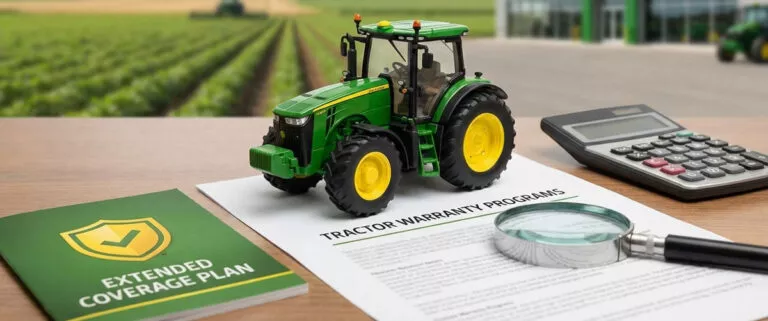
Buying a tractor is a big decision. It is not like buying a bicycle or a mobile phone that you can replace easily if something goes wrong. A tractor is a long-term investment, and it works hard every single day in the field, under sun, dust, mud, and rough terrain. So it makes total sense that most buyers get confused about one important thing: should you go for a 2-year warranty or stretch it out to a 6-year warranty?
This question sounds small, but it can actually save or cost you a lot of money down the road. Let's break it down in the simplest way possible, so you can make a smart choice without any confusion.
What Does a Tractor Warranty Actually Mean?
Before comparing the two, let's understand what a warranty really is.
A warranty is basically a promise from the tractor company. It says, "If something breaks down because of a manufacturing fault within this time period, we will fix it or replace the part for free or at a low cost."
Think of it like a safety net. If your tractor engine, transmission, or any major part fails due to a factory defect, the company takes care of the repair bill instead of you paying out of your own pocket.
Now, the big question is: how long should this safety net last? Two years, or six years?
The 2-Year Warranty: What You Get
Most tractors traditionally come with a standard 2-year warranty. This has been the normal industry practice for many years, and it still works well for a lot of buyers.
Here is what a 2-year warranty usually covers:
Manufacturing defects in the engine and major parts
Free repairs or replacements during the covered period
Basic peace of mind for the first couple of years of use
A 2-year warranty is a good fit if you plan to use your tractor moderately, if you already trust the brand because of past experience, or if you want to keep your upfront cost a little lower.
However, here is the catch. A tractor's real test does not happen in the first two years. It happens later, once the machine has done thousands of hours of hard work. That is usually when bigger parts like the transmission, hydraulics, or engine components start showing wear and tear. And guess what? By the time these issues show up, your 2-year warranty might already be over.
The 6-Year Warranty: What You Get
Now let's talk about the 6-year warranty, which has become more popular in recent years, especially with certain leading tractor brands offering it as a trust-building feature.
A 6-year warranty usually covers:
Everything the 2-year warranty covers, but for a much longer time
Protection against major part failures that often show up after years of heavy use
Long-term peace of mind, especially for farmers who use their tractor daily for serious farm work
This extended coverage means that even if something goes wrong in year four or year five, when the tractor has already worked hard for years, you are still protected. That is a huge relief, especially for full-time farmers who cannot afford unexpected repair costs in the middle of a farming season.
Breaking Down the Real Difference
Let's simplify this with an easy comparison.
Cost of tractor: Tractors with a 6-year warranty are sometimes priced slightly higher, or the warranty may come as part of a special scheme. But when you calculate the long-term savings on repairs, it often works out cheaper overall.
Risk coverage: A 2-year warranty protects you only in the early stage. A 6-year warranty protects you through the years when major breakdowns are more likely to happen.
Resale value: A tractor still under warranty is more attractive to future buyers if you ever decide to sell it. A 6-year warranty tractor holds stronger resale value for a longer time.
Mental peace: Farming already comes with enough uncertainty, from weather to market prices. Not worrying about tractor repair bills for six long years gives real peace of mind.
Who Should Choose a 2-Year Warranty?
A 2-year warranty can still make sense in certain situations:
If you use the tractor only occasionally, like for a small farm or a part-time need
If you trust the brand deeply because of years of good experience with it
If your budget is tight right now and you want to save on the initial purchase cost
If you plan to upgrade or sell the tractor within a few years anyway
In these cases, a shorter warranty is not a bad choice. It simply matches your usage pattern.
Who Should Choose a 6-Year Warranty?
A 6-year warranty makes more sense if:
You use the tractor daily or almost daily for serious farming work
You plan to keep the same tractor for many years
You want to avoid sudden, expensive repair bills in the future
You value long-term financial planning over short-term savings
For most full-time farmers, especially those who depend entirely on their tractor for their livelihood, the 6-year option tends to be the smarter and safer choice.
A Simple Way to Decide
Here is an easy way to think about it. Ask yourself one question: "How much would it hurt my pocket if a major tractor part failed in year four or five?"
If the answer is "a lot," then the 6-year warranty is worth considering, even if it costs a bit more upfront. If the answer is "not much, since I barely use the tractor," then a 2-year warranty is probably enough for your needs.
Common Myths About Tractor Warranties
Myth 1: A longer warranty means the tractor is weaker. This is not true at all. In fact, brands that offer longer warranties are usually more confident about their build quality, not less.
Myth 2: Warranty covers everything, no matter what. Not exactly. Warranties usually cover manufacturing defects, not damage caused by misuse, accidents, or lack of regular maintenance. Always read the warranty terms carefully.
Myth 3: You never need to service the tractor if it has a warranty. Regular servicing is still required. Skipping maintenance can even void your warranty in some cases, so keep up with routine checkups.
Final Thoughts
Choosing between a 2-year and a 6-year tractor warranty really comes down to how you plan to use the tractor and how much long-term security you want. If you are a serious, full-time farmer looking for years of stress-free use, the 6-year warranty is generally the safer bet. If your usage is lighter or your budget is tighter right now, a 2-year warranty can still serve you well.
At the end of the day, a tractor is not just a machine. It is a partner in your daily hard work. Choosing the right warranty is one small decision that can protect that partnership for years to come.
Related Stories
 Comparisons
Tata Punch EV vs MG ZS EV — Which Electric SUV Wins?
City-friendly Tata Punch EV or the bigger, more powerful MG ZS EV? We compare specs, range, features and value.
 Comparisons
Hyundai Creta vs Kia Seltos — The Eternal Korean SUV Question
Built on the same platform, these cousins fight for the same buyer. We pick the better SUV for the money.